

Milo (Sorghum) Grain Spawn: The Complete Guide for Mushroom Cultivation

Sterile Grain Spawn Guide
Milo Grain Spawn: Why Sorghum Is One of the Best Grains for Mushroom Cultivation
If you've been researching grain spawn options, milo keeps coming up for a reason—and it's not just hype. Its small, uniform kernels strike a balance that's hard to match: enough nutrition to support fast colonization, enough structure to stay separate after a break and shake, and enough versatility to work across liquid culture, agar transfers, and grain-to-grain expansion.
At Mycology Simplified, milo has remained one of our primary grain options because it performs reliably across a wide range of gourmet and medicinal mushroom cultures. Properly prepared milo gives you a clean, consistent starting point—so you can focus on technique instead of troubleshooting your grain.
Shop Sterile Milo Grain Spawn
Jump to a section
What Is Milo? Nutrient Profile Why Milo Works Inoculation Methods How We Prepare It Bag Sizes FAQ
Grain spawn is one of the most important parts of mushroom cultivation. It gives mycelium a nutritious material to colonize before that culture is introduced to a larger fruiting substrate.
However, choosing a grain is only part of the equation. The grain must also be cleaned, hydrated, dried properly, packaged, sterilized, sealed, cooled, and handled correctly. Even a high-quality grain can perform poorly if its moisture level or preparation process is inconsistent.
Milo offers several natural advantages that make those variables easier to manage. The kernels are relatively small, the grain hydrates well, and properly prepared bags remain easy to break apart and redistribute during colonization.
Why this matters
Every colonized kernel becomes a potential inoculation point when grain spawn is mixed with substrate. Milo's small kernel size allows a large number of individual grains to be distributed throughout a project.
What Is Milo?
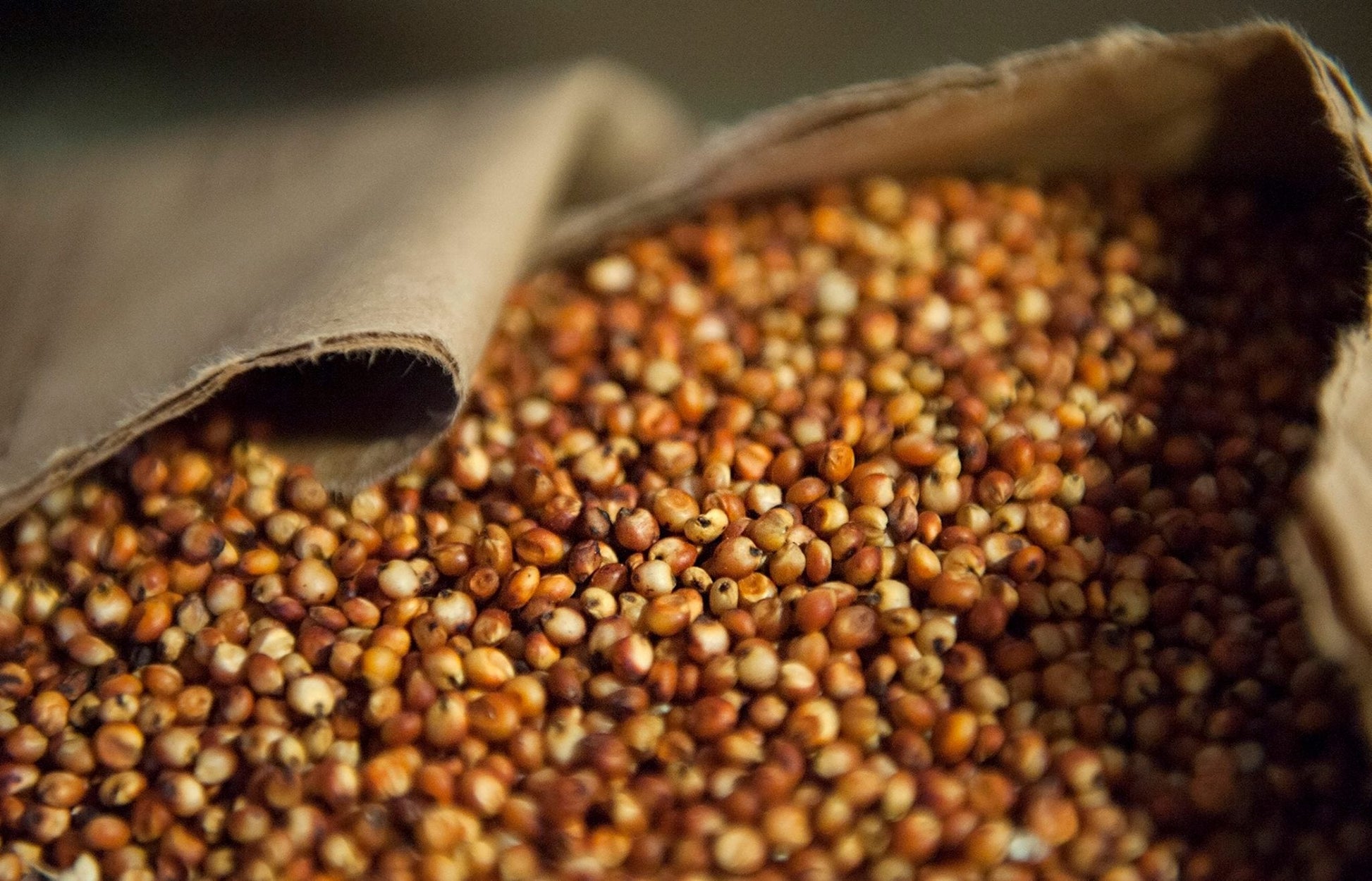
Milo is a common name for grain sorghum, a cereal grain in the grass family. Sorghum is cultivated throughout many parts of the world and is used for food, livestock feed, syrups, flour, brewing, and other agricultural applications.
The terms milo and sorghum are often used interchangeably by mushroom cultivators. In the context of grain spawn, both terms generally refer to the small, round kernels used as a nutrient source for mycelium.
The grain may appear red, tan, bronze, white, or a mixture of shades depending on the variety and source. Natural variation in color does not automatically indicate a difference in suitability. The factors that matter most are grain quality, cleanliness, hydration, sterilization, and handling.
The Nutrient Profile of Milo
Mushroom mycelium needs access to usable carbohydrates, protein, minerals, moisture, and other nutrients as it expands through a grain bag. Milo naturally provides a balanced combination of these components.
The exact nutritional composition of sorghum varies by variety, growing conditions, storage, and processing. As a general agricultural grain, milo is primarily composed of carbohydrates, with smaller but meaningful amounts of protein, fiber, fat, vitamins, and minerals.
| Component | General Role in the Grain |
|---|---|
| Carbohydrates and starches | Provide a concentrated energy source that supports expanding mycelium. |
| Protein | Contributes nitrogen-containing compounds and amino acids within the grain. |
| Fiber | Forms part of the structural material surrounding and supporting each kernel. |
| Minerals | Sorghum contains minerals such as phosphorus, magnesium, potassium, iron, and zinc. |
| B vitamins | Naturally occur in the grain as part of its overall nutritional composition. |
| Moisture after hydration | Creates the internal water reserve needed to support colonization. |
Nutrition is important, but more nutrition does not automatically make a grain better. An effective grain spawn must balance nutrient availability with proper hydration, kernel structure, gas exchange, and clean preparation.
Important distinction
The nutritional profile describes the grain itself. It does not guarantee successful spawn. Moisture level, sterilization, culture health, inoculation technique, temperature, and storage conditions all affect the final result.
Why Milo Works So Well as Mushroom Grain Spawn
1. Small Kernels Create Numerous Inoculation Points
One of milo's greatest advantages is its kernel size. A bag of milo contains a large number of individual grains compared with an equal weight of many larger grains.
As the bag colonizes, mycelium spreads from kernel to kernel. Once the grain is fully colonized and mixed into an appropriate substrate, each separated kernel helps distribute mycelium throughout the new material.
More individual kernels can mean more evenly distributed contact points, especially when the bag breaks apart cleanly and is mixed thoroughly.
2. Milo Holds Moisture Inside the Kernel
Proper hydration allows the interior of each grain to retain moisture while the outside remains relatively dry. This is one of the most important goals of grain preparation.
Grain that is too dry may colonize slowly or stall. Grain that is excessively wet can become sticky, burst, clump together, or create undesirable conditions inside the bag.
When milo is prepared correctly, its kernels remain hydrated without turning into a heavy mass of wet grain.
3. Properly Prepared Milo Is Easy to Break and Shake
A break and shake redistributes colonized grain through the uncolonized portions of a bag. This creates new points of contact and helps the grower evaluate how well the culture recovers.
Milo works well for this because its small kernels can separate and move throughout the bag. Good external drying and correct hydration are essential—poorly prepared grain can still clump regardless of the grain variety.
4. The Kernel Size Supports Even Distribution
Larger grains can work extremely well, but their size means there are fewer individual pieces per pound. Milo's smaller kernels make it easy to spread grain throughout a shoebox, monotub, tray, or other suitable project.
Even distribution helps prevent large sections of substrate from receiving little or no colonized grain.
5. Milo Is Versatile
Milo can be used with several common mycology workflows. It is suitable for beginners who want a ready-to-inoculate bag, as well as experienced cultivators working with agar or grain-to-grain expansion.
It can also be used with many gourmet and medicinal mushroom species, although colonization speed and appearance will vary by species and culture.
Ways to Inoculate Milo Grain Spawn
Milo is compatible with several standard inoculation methods. The best option depends on your experience, culture type, and available workspace.
Liquid Culture
Liquid culture is one of the most convenient ways to inoculate a grain bag equipped with a self-healing injection port. The culture can be injected through the port without opening the bag.
The amount used should be appropriate for the bag size and the concentration of the culture. Excess liquid is not necessarily better because it adds additional moisture to the grain.
Agar Transfers
A clean agar culture can be cut into wedges and transferred to grain inside a clean workspace. Agar allows the cultivator to inspect growth before introducing the culture to the bag.
This method requires the bag to be opened and resealed, so good sterile technique and an appropriate work environment are important.
Grain-to-Grain Transfers
Grain-to-grain transfer involves placing a portion of healthy colonized grain into a fresh sterile grain bag. Milo is especially useful for this method because its small kernels can create many separate inoculation points.
Grain-to-grain expansion should only be performed with clean, healthy spawn. Any issue present in the original bag may also be transferred into the receiving bag.
Clean culture still matters
Sterile grain is only one part of a successful inoculation. The culture, syringe, agar wedge, tools, work surface, and handling process must also be clean.
What Healthy Milo Colonization Can Look Like
Healthy mycelium often begins as small patches of white growth near the inoculation point. Over time, those patches expand and connect across nearby kernels.
The exact appearance can vary considerably. Some cultures produce thick, bright-white growth, while others appear lighter, thinner, or more wispy. Growth pattern alone should not be used to identify a species or guarantee culture health.
General signs worth watching include:
- Growth that expands outward from the inoculation area
- White mycelium gradually appearing across additional kernels
- Recovery and renewed growth after a break and shake
- Grain that remains reasonably separated instead of turning into a wet mass
- No unusual bright colors, heavy slime, or strongly unpleasant odors
Condensation by itself does not automatically mean a bag is contaminated. Temperature changes can cause moisture to collect on the inside of the plastic. The overall condition of the grain and the way the culture develops are more useful than one isolated sign.
How Mycology Simplified Prepares Milo Grain Spawn
Preparing dependable grain spawn requires more than putting dry grain into a bag and running a sterilization cycle. Each stage affects how the final bag handles and colonizes.
Grain Selection and Inspection
Agricultural grains naturally contain variation. Depending on the harvest and supplier, a batch may include differences in kernel size, color, surface texture, chaff, or the occasional stray agricultural material.
We inspect and process our grain with the goal of producing clean, consistent bags while recognizing that milo is a natural agricultural product rather than a manufactured material.
Controlled Hydration
Milo must absorb enough water to support colonization without becoming oversaturated. Hydration is one of the most critical steps in grain preparation.
Our process is designed to hydrate the center of the kernel while limiting excessive surface moisture and unnecessary bursting.
External Drying
After hydration, excess water must be removed from the outside of the grain. This helps the kernels remain separate inside the finished bag and reduces pooling or heavy clumping.
Commercial Sterilization
Our milo bags are sterilized using commercial autoclaves. The combination of temperature, pressure, and cycle time is designed for the size and density of the product being processed.
Cooling and Quality-Control Hold
Sterilized grain must cool completely before it is inoculated or shipped. Our bags are also given a quality-control hold before they are listed or sent to customers.
This additional time allows us to inspect the finished bags instead of moving them directly from the sterilization process into a shipping box.
Protective Packaging
Each milo grain bag includes a filter patch for gas exchange and a self-healing injection port for convenient inoculation with a suitable syringe.
The sterilized grain bag is also protected inside a secondary outer bag during storage and shipping. The outer bag helps keep the primary bag clean and provides another layer of protection while the order is in transit.
Choosing the Right Milo Grain Bag
We currently offer our sterile milo grain spawn in a 3 lb bag, a 5 lb bag, and a convenient two-pack containing two separate 3 lb bags.
All three options use the same general preparation and quality-control standards. The best choice depends on the size of your project and whether you prefer one larger bag or multiple smaller bags.

Flexible Everyday Size
3 lb Sterilized Milo Grain Bag
Our 3 lb milo bag is a versatile option for small and medium-sized projects. It gives you a useful amount of grain without requiring you to commit an entire 5 lb bag to one culture.
The 3 lb bag is a good choice for:
- Shoebox-style projects
- Small or medium monotubs
- Testing a new liquid culture
- Working with agar wedges
- Growers who prefer smaller individual bags

Larger Project Size
5 lb Sterile Milo Grain Spawn
Our 5 lb milo bag provides more grain in a single package. It is useful for larger projects or for cultivators who already know how much spawn they plan to use.
The 5 lb bag is a good choice for:
- Larger monotubs and bulk projects
- Growers who want more spawn in one bag
- Established cultures that have already been tested
- Projects using a larger amount of substrate
- Reducing the number of individual bags needed

Two Separate Bags
Two-Pack of 3 lb Milo Grain Bags
The double pack includes two individually packaged 3 lb milo grain bags. This gives you 6 lb of total grain while preserving the flexibility of two separate bags.
The two-pack is a good choice for:
- Running two cultures at the same time
- Splitting grain between separate projects
- Keeping one bag available as a backup
- Avoiding the need to place all of your grain into one bag
- Growers who want more grain with added flexibility
3 lb vs. 5 lb Milo: Which Size Should You Choose?
| Option | Best For | Main Advantage |
|---|---|---|
| 3 lb Milo Bag | Small to medium projects, testing cultures, and first-time grain users | Easy-to-manage individual bag size |
| 5 lb Milo Bag | Larger projects and growers who need more grain in one bag | More spawn in a single package |
| Two 3 lb Bags | Multiple cultures, separate projects, or keeping a backup | Six total pounds divided between two bags |
There is no universally correct bag size. A smaller bag is not automatically better than a larger bag, and a larger bag does not guarantee better results. Choose the size that fits your project, experience level, inoculation method, and substrate plan.
How to Store Milo Grain Spawn Before Inoculation
Sterile grain should be stored in a cool, dry location away from direct sunlight and major temperature swings. Keep the primary grain bag sealed until you are ready to inoculate it.
Leave the filter patch unobstructed and avoid stacking heavy items on top of the bag. Do not open the bag simply to inspect or smell the grain. Opening it outside a clean transfer process removes the protection created during sterilization.
Before inoculating, inspect the bag for visible damage, broken seals, unusual colors, or other concerns. Contact us before using the product if something appears wrong when it arrives.
Why Start With Professionally Prepared Milo?
Making grain spawn at home can be a rewarding part of mycology, but it involves several separate skills and pieces of equipment. The grain must be hydrated consistently, dried correctly, loaded into suitable bags or jars, pressure sterilized, cooled, and handled without introducing contamination.
Starting with professionally prepared sterile grain removes many of those preparation variables. This allows newer cultivators to focus on inoculation, culture behavior, colonization, sterile technique, and learning when a bag is ready for its next step.
Experienced growers may also use premade grain when they want to save preparation time, increase production capacity, or avoid running another sterilization cycle for a small project.
Fewer variables make troubleshooting easier
When hydration and sterilization are already handled, you can give more attention to culture cleanliness, inoculation technique, incubation conditions, and mycelial recovery.
Why Growers Choose Mycology Simplified
Mycology Simplified is a small, family-operated business focused on producing dependable mycology supplies in manageable batches.
Our milo grain spawn is prepared with careful hydration, commercial sterilization, filter patch bags, self-healing injection ports, a secondary protective outer bag, and a quality-control hold before shipping.
We understand that every bag represents more than grain. It may also represent a culture you have spent weeks developing, a new species you are excited to study, or the beginning of your first mushroom cultivation project.
Our goal is to give you a consistent starting point so you can focus on the part that matters most: learning, improving your technique, and watching healthy mycelium grow.
Milo Grain Spawn FAQ
Are milo and sorghum the same thing?
Milo is a common name for grain sorghum. Within mushroom cultivation, the words milo and sorghum are frequently used to describe the same type of small cereal grain.
Is milo good for beginner mushroom growers?
Yes. Properly prepared milo is a practical option for beginners because it works with common inoculation methods and can be easy to redistribute during colonization.
Can I inoculate milo with liquid culture?
Yes. Our milo grain bags include a self-healing injection port that allows compatible liquid culture syringes to be used without opening the bag.
Can I inoculate milo with an agar wedge?
Yes. Clean agar wedges can be transferred to milo grain. Because this method requires opening the bag, it should be performed in an appropriate clean workspace using sterile technique.
Can milo be used for grain-to-grain transfers?
Yes. Milo's small kernels make it well suited for grain-to-grain transfers. Only clean, healthy colonized grain should be used as the source.
When should I break and shake a milo grain bag?
Many growers perform a break and shake after a noticeable portion of the grain has colonized. The exact timing depends on the culture, bag size, and growth pattern. The goal is to distribute healthy colonized kernels without repeatedly disturbing the bag.
Does condensation mean my grain bag is contaminated?
Not necessarily. Condensation can form when the temperature inside and outside the bag changes. Evaluate the overall appearance of the grain and mycelium rather than relying on condensation alone.
Why are some milo kernels different colors?
Milo is a natural agricultural product, and color can vary by variety and harvest. Red, tan, bronze, and lighter kernels may appear within the grain.
What is the difference between the 3 lb and 5 lb bags?
The primary difference is the amount of grain. The 3 lb bag is easier to dedicate to a smaller project, while the 5 lb bag provides more spawn in one package.
Why would I choose two 3 lb bags instead of one larger bag?
Two separate bags allow you to run different cultures, divide grain between projects, or keep one bag available as a backup. The double pack contains 6 lb of total grain divided between two individually packaged bags.
How long should I store an unused bag?
Sterile grain is best used while it is fresh. Storage conditions influence shelf life, so keep the bag sealed in a cool, dry location and inspect it before inoculation. Avoid unnecessary long-term storage when possible.
Final Thoughts
Milo has earned its place as one of the most widely used grains in mushroom cultivation. Its small kernel size, balanced nutritional composition, hydration characteristics, and ability to separate during a break and shake make it a dependable choice for many mycology workflows.
The grain itself is only part of the process. Consistent hydration, external drying, proper sterilization, quality packaging, clean inoculation, healthy cultures, and suitable incubation conditions all work together to produce reliable spawn.
Whether you are preparing a small shoebox project, working with a larger monotub, testing a new culture, or expanding healthy mycelium through grain-to-grain transfers, our sterile milo bags provide a professionally prepared starting point.
Choose Your Milo Grain Spawn
Available as a single 3 lb bag, a single 5 lb bag, or a two-pack of individually packaged 3 lb bags.
For legal gourmet, culinary, and medicinal mushroom cultivation only. These products are intended exclusively for growing or studying legal mushroom species and are not intended for any illegal use.